_ projects
/
GamedayLGX
Sports Travel CRM
A centralized platform for managing sports travel operations.
Overview
GamedayLGX’s existing processes relied on disconnected tools, making their everyday workflows difficult to manage and keep organized.
I led UX for their desktop CRM platform, creating a centralized system that simplified operations, improved visibility, and gave teams a more efficient way to manage their work.
Problem
Managing travel for sports teams required coordinating teams, vendors, reservations, documents, and communication across multiple disconnected tools.
Without a centralized system, information was scattered, workflows were difficult to track, and employees spent unnecessary time switching between platforms and manually managing updates.
Goal
Create a centralized system that simplifies trip management, improves visibility and streamlines communication.
User Needs
Through stakeholder input and workflow analysis, we identified four core needs:
Streamlined Trip Management - Employees needed a more structured way to manage trips, reservations, scheduling, and related workflows.
Single Source of Truth - Information about teams, vendors, contracts, and documents needed to be centralized and easily accessible.
Clear & Consistent Communication - Employees needed a more efficient way to send requests, track responses, and share updates.
Integrated Task & Workflow Management - Tasks, documents, and communication needed to stay connected to the trip context rather than being managed separately.
Flows
To fully understand the scope and connection between the different parts of this app, we began by mapping out user flows, information architecture and data flows.


Iterations & Feedback
Our first hi-fi iterations:


Feedback
After presenting designs to the stakeholders, we gathered feedback:
The initial calendar on the dashboard, was impractical for travel coordinators managing a large amount of tasks, trips, and reservations.
We needed to include a lot more information for trips to ensure compliance with legal requirements.
There was a unanimous decision to convert the app to dark mode to elevate the overall aesthetic appeal of the app.
Designs
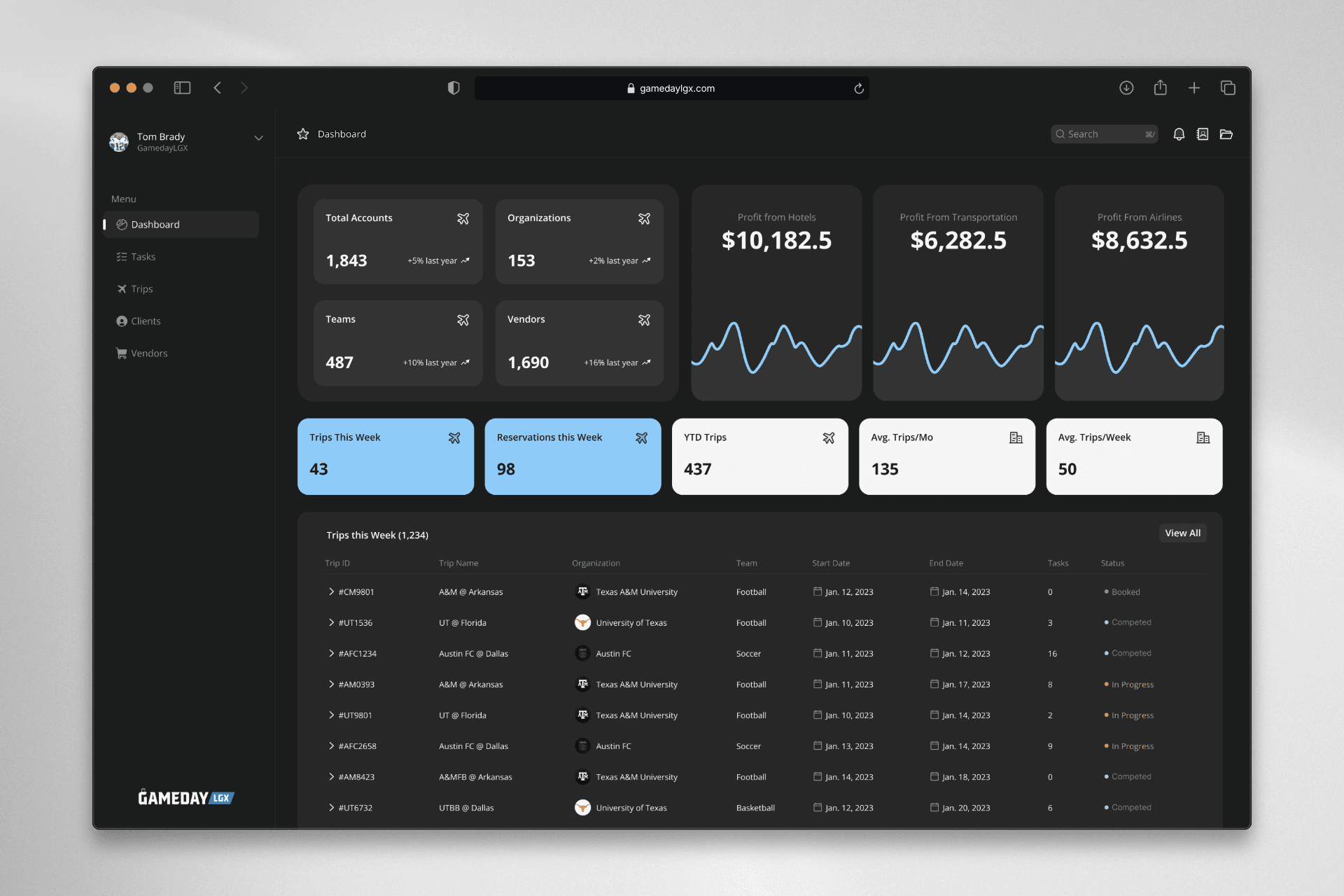
Centralized Dashboard
I created a dashboard that gives coordinators an immediate view of trips, tasks, and key business information.
Track trip status and progress in real time
Surface important metrics and alerts
Access high-priority actions quickly
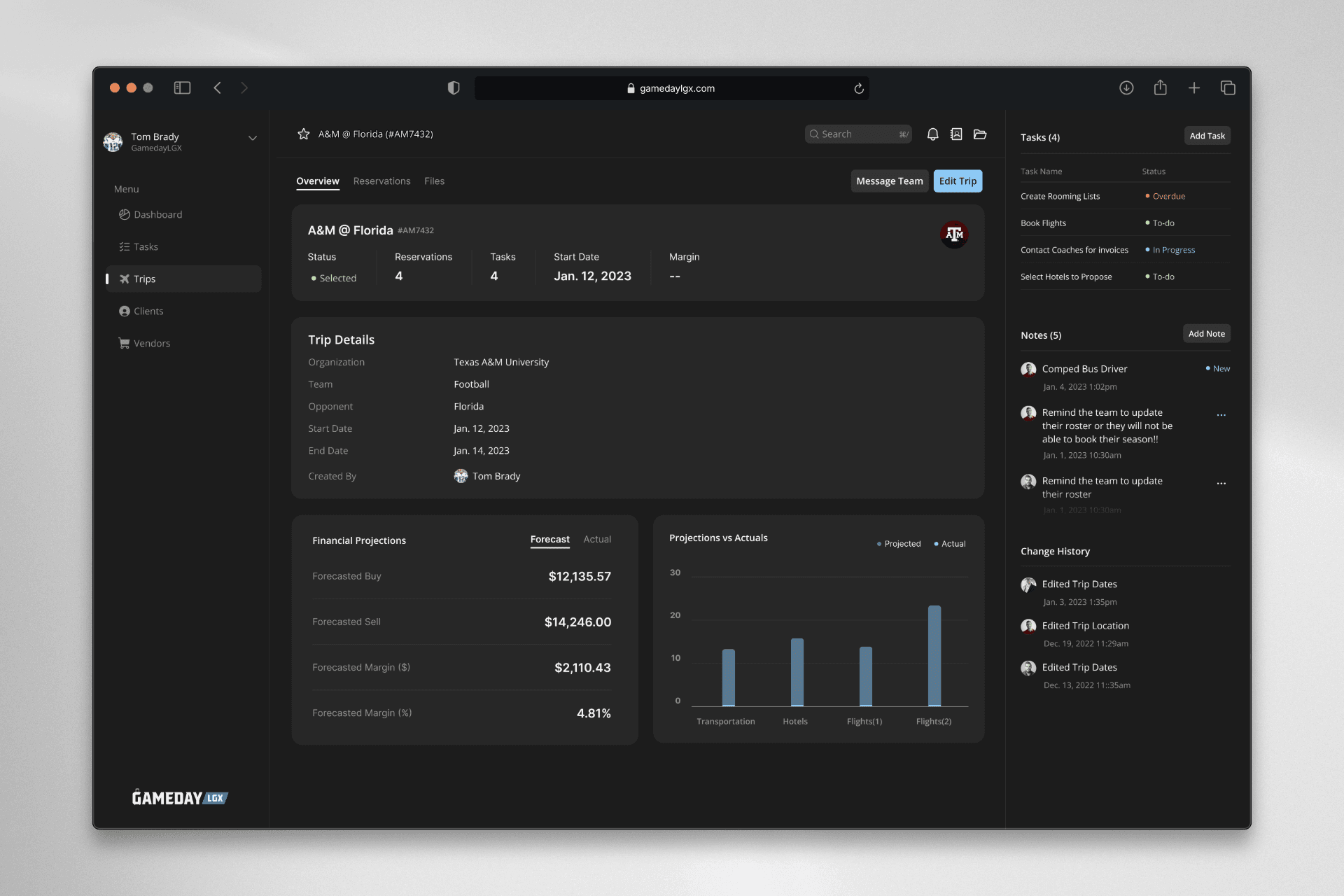
End-to-End Trip Management
The trip workspace brings together the full lifecycle of a trip, from reservations and vendors to documents and financial details.
Manage trip information and bookings
Access vendor details and documents
Track costs, forecasts, and related tasks
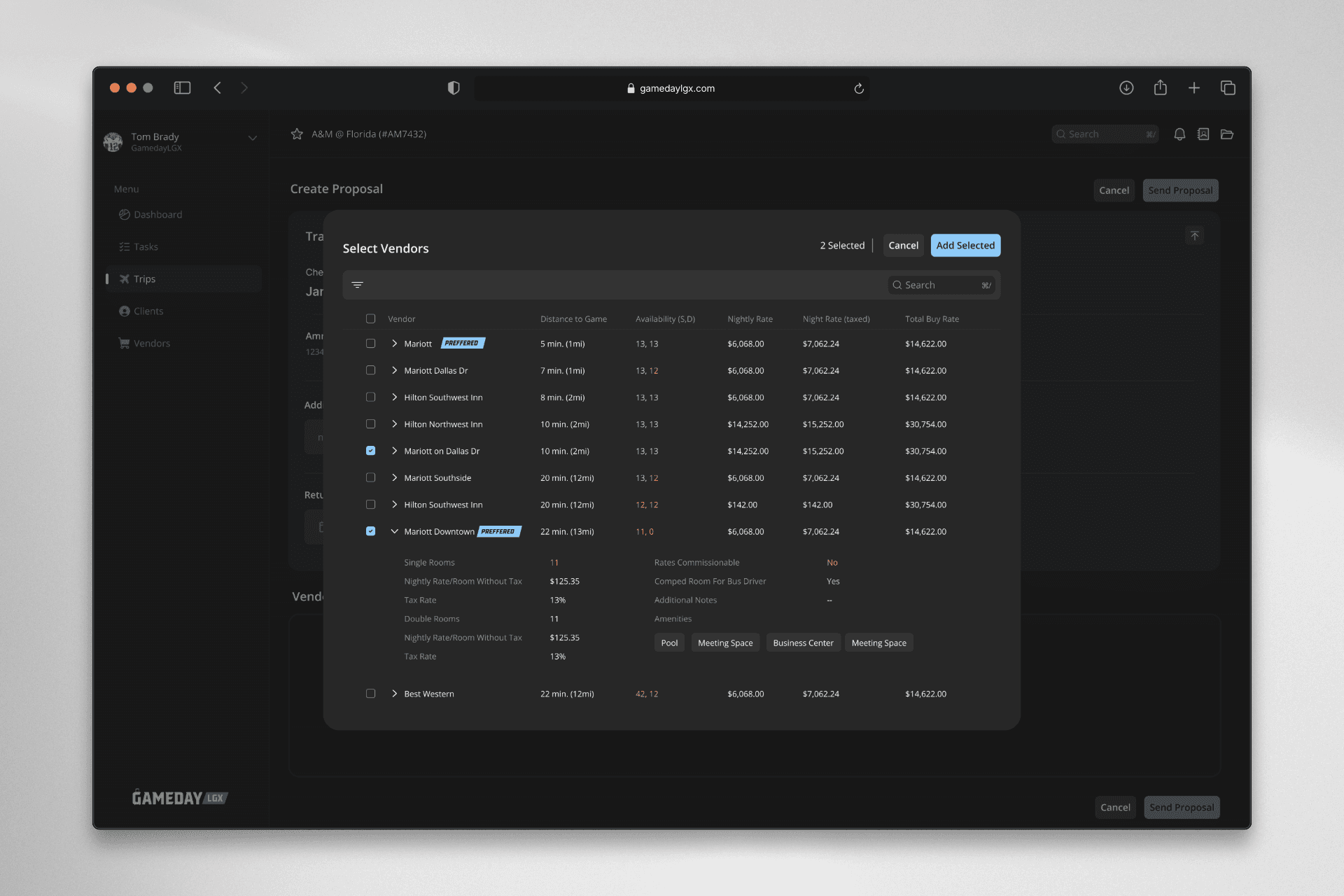
Streamlined Vendor Rate Requests
Employees can request rates from vendors and then quickly convert those into proposals for the team.
Request rates from multiple vendors at once
Allow vendors to respond through a simple external form
Build client proposals directly from vendor responses
Capture client selections back into the system

Contextual Side Panel
A dynamic side panel keeps important information accessible without pulling users away from their current workflow.
View tasks, notes, and activity history
Collaborate through comments
Track updates while staying in context
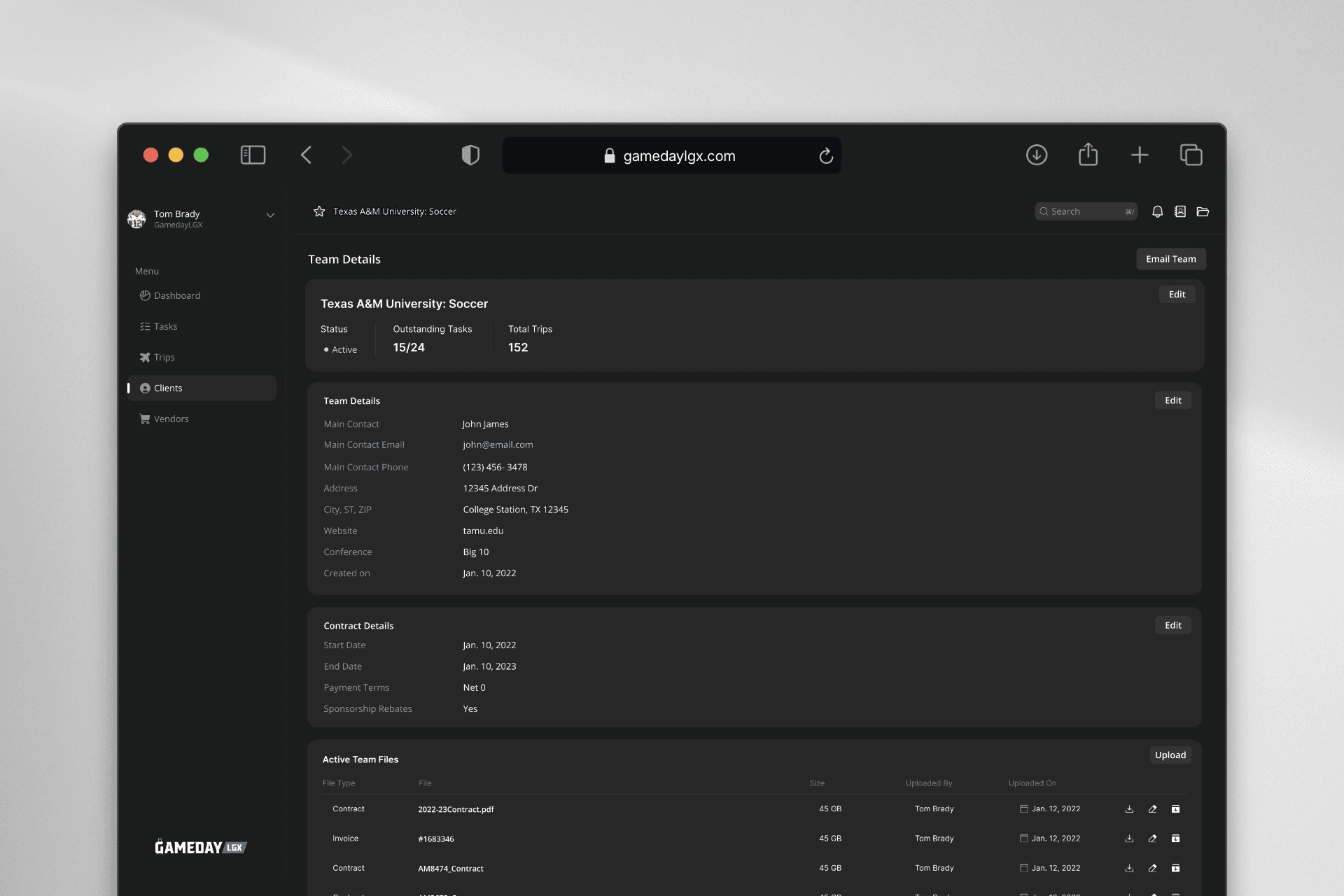
Team & Vendor Profiles
Structured profiles and communication tools created a more reliable way to manage relationships across the organization.
Centralized contracts, pricing, and documents
Standardized data for compliance and booking
Impact & Results
The new CRM transformed a fragmented operational process into a centralized system for managing sports travel.
Reduced time spent switching between disconnected tools
Improved visibility into trip status, tasks, and business operations
Reduced errors by centralizing critical information
Streamlined coordination between teams, vendors, and clients
Created a scalable foundation for future growth
Takeaways
What I Learned From Gameday
Complexity Requires Strong Structure - Designing for a product with interconnected workflows reinforced the importance of strong information architecture, hierarchy, and modular thinking to reduce complexity.
Information Architecture Is Critical to Product Success - Mapping relationships between trips, teams, vendors, and tasks showed how critical information architecture is for creating scalable systems and aligning design and development teams.
Team Alignment Is the Most Important Feature - Working closely with developers, PMs, and stakeholders helped ensure the system was not only usable, but also feasible to build and maintain.
Project details
Client
GamedayLGX
Timeline
1 year
Industry
Travel
Deliverable
Web App
Comment

Madison
Some information in this case study has been anonymized. This case study reflects my perspective and not necessarily those of the client.